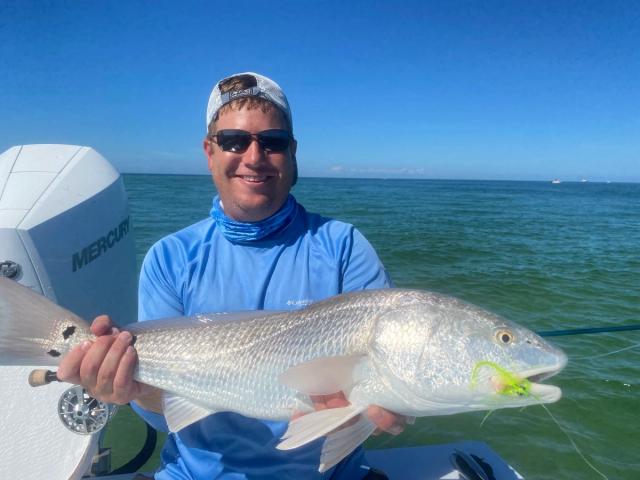
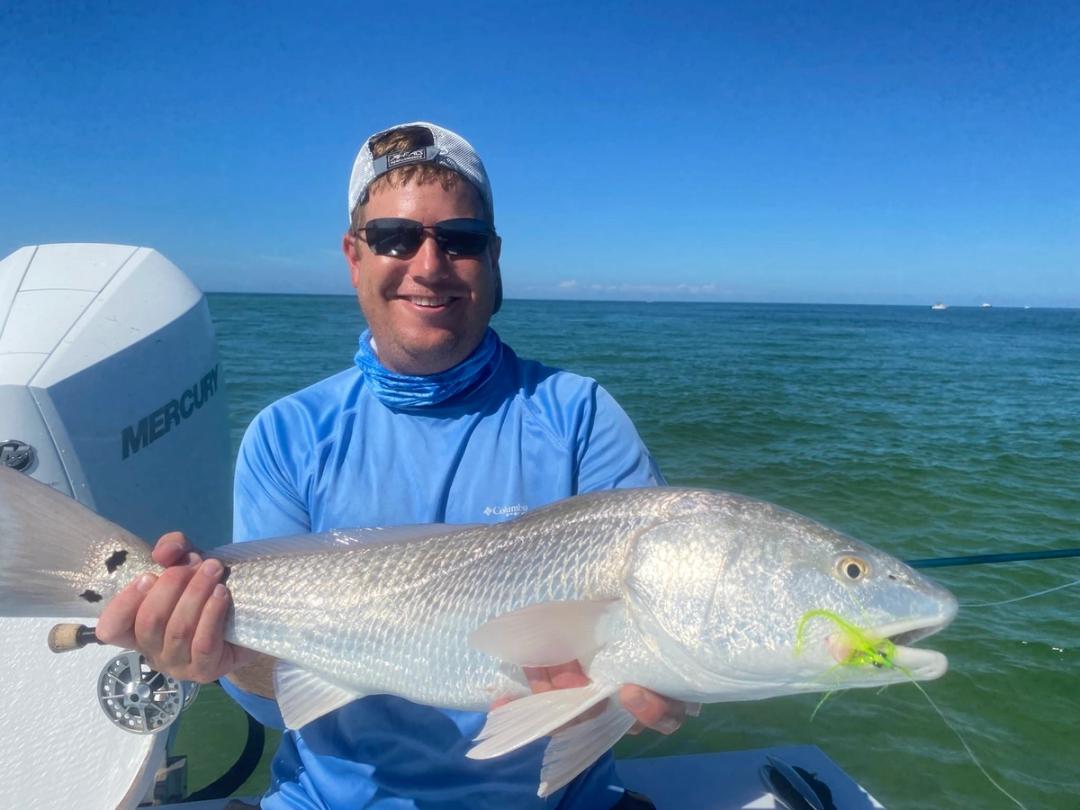
Fly fishing Anna Maria Island really comes into its own once fall settles in. The grass flats quiet down after the summer crowds, redfish start pushing onto skinny water to feed, and on a still morning you can watch a fish's tail break the surface before you ever spot the fish itself. That's the shot we build our fall trips around: a real, visible target on eight- or nine-weight tackle, not a blind cast into open water. Book one of our fly fishing charters in October or November and there's a good chance that's exactly what you're casting to.
Fly Fishing Anna Maria Island's Skinny Water in Fall
We're not running you out to open water for this. Fall fly fishing happens on the same skinny grass flats and mangrove edges we fish inshore all year — Anna Maria Island's back side, the flats north toward Tampa Bay, and the mangrove shorelines that hold bait once the water starts to cool. A dropping tide pulls water off those flats and concentrates redfish along the last few inches of depth, which is exactly where a fly angler wants them: shallow enough to see, calm enough to hear a cast land.
Reading the Tail
A tailing redfish is doing one thing: eating something off the bottom with its head down and its tail up, sometimes breaking the surface, sometimes just pushing a wake. We pole the flat slow and quiet, looking for that push or a flash of copper before the fish knows we're there. Once we spot one, the cast has to lead it by a few feet and land soft — a fly that lands on top of a tailing red usually spooks it instead of feeding it. Get the lead right and a tailing redfish will eat a well-presented fly with total confidence; it's some of the most exciting sight-fishing we do all year.
Fly Gear That Works on These Flats
An 8-weight rod covers most of what we need for redfish this size, with a floating line and a 9- to 10-foot leader tapered down to 15- or 16-pound fluorocarbon. Fly choice depends on the bottom: a lightly weighted shrimp or crab pattern for skinny grass, a spoon fly when the water's got a little more depth and current to it. We keep the retrieve slow on tailing fish — short strips, long pauses — since a fly stripped too fast off a head-down fish just gets ignored.
Timing the Tide, Not the Calendar
Tide matters more than time of day for this pattern. The last two hours of a falling tide pull the most water off the flats and push fish onto the last skinny edges, which is when we see the most tails. A full moon in October or November exaggerates that swing even more, so we watch the tide charts before we watch the forecast when we're picking a morning to run this program. Every fall fly trip gets scheduled around that window instead of a fixed departure time.
Redfish Regulations on Our Water
Redfish are open year-round on the water we fish. Both the Tampa Bay and Sarasota Bay management regions — which together cover Anna Maria Island, Tampa Bay, and the flats south toward Sarasota — carry the same rule: an 18- to 27-inch slot, one fish per person, and a two-fish vessel limit. We fish this mostly as a release fishery on the fly anyway; a hero shot and a clean release keeps a good fish tailing on the same flat next trip.
If you've never seen a redfish eat a fly off the surface of six inches of water, fall on Anna Maria Island is the time to find out. We run these flats the same slow, careful way for every angler aboard — the tailing fish don't care how many casting lessons you've had, just a quiet approach and a soft presentation. Call or book a fly fishing trip and we'll build the day around the tide and the wind, not the clock.
Ready for a day like this on the water? Book an Anna Maria Island fishing charter with Captain David White or compare our guided trip options — trips run year-round from Holmes Beach.